

Hail Damage Roof Repair
Houston's spring storm season can push hail across a neighborhood in a few minutes, and the roof underneath often looks perfectly normal afterward. Here's what hail actually does to shingles, and how we find it before it turns into a leak.
How hail damages a roof without leaving a hole
Hail rarely punches straight through a shingle. More often it bruises the fiberglass mat underneath the granule surface — a small fracture that doesn't show as a hole or a tear, just a soft spot where the shingle's ability to shed water has quietly been compromised. That kind of damage doesn't announce itself. A roof can take a hard hailstorm and look completely fine from the driveway, then start losing granules and failing years ahead of schedule because the mat was cracked the whole time.
Softer building components tend to show hail impact more plainly than shingles do. Aluminum gutters, downspouts, roof vents, flashing and even window screens can pick up round impact marks that give away the direction and intensity of a storm, which is one reason we look at the whole roofline and not just the shingle field.
Signs worth a closer look
- Random, scattered granule loss rather than the even, gradual wear of an aging roof.
- Soft or spongy spots underfoot in isolated areas of the shingle field.
- Impact marks on soft metal — gutters, vent housings, AC coil fins, flashing — especially on slopes that faced the storm.
- Granules collecting in gutters and downspouts after a storm that didn't otherwise seem severe.
- Cracked or split shingles, which are more obvious but still easy to miss from ground level.
What our inspection documents
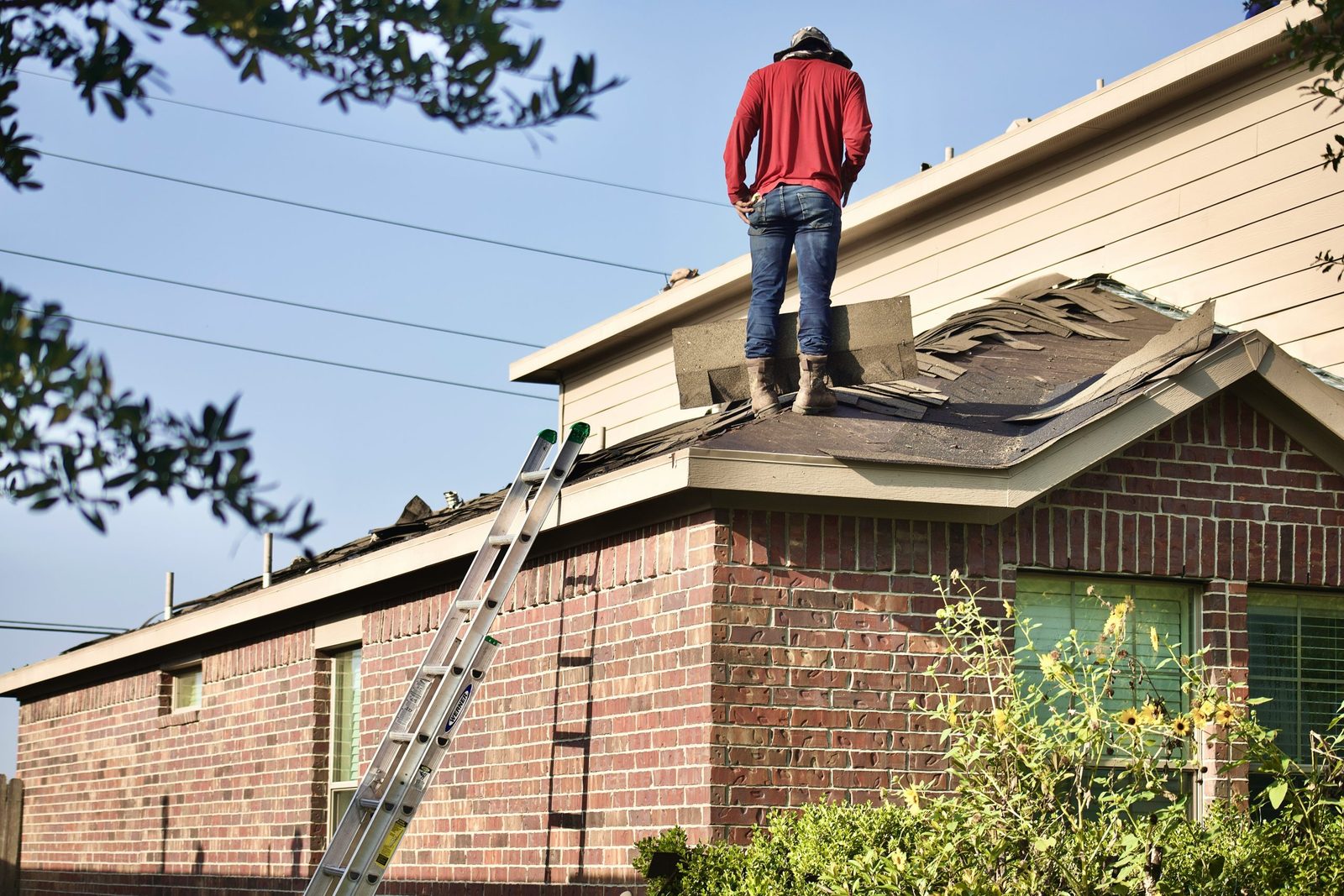
A hail inspection starts with the slopes that faced the storm, since impact patterns usually aren't uniform across a roof. We look closely at the shingle mat, not just the surface, check flashing, vents and gutters for corroborating impact marks, and photograph everything we find with enough detail to hold up on its own. If attic access is available, we'll also check the underside of the deck for early moisture signs. The goal is a written, photographed record of exactly what's there — not a guess based on the roof's age.
Repair or replacement after hail
An isolated hit or two on an otherwise sound roof is usually a straightforward repair. Widespread bruising across multiple slopes, especially on a roof that's already getting older, more often points toward a full replacement, since patching a roof that's failing broadly tends to just delay the same decision. We'll tell you honestly which situation you're in rather than defaulting to the bigger job.
Hail damage and your insurance claim
Most hail-related roof work in Houston goes through an insurance claim rather than being paid out of pocket, and documentation is what separates a smooth claim from a frustrating one. We provide the photographed inspection report and meet the adjuster on the roof so what gets measured matches what's actually there. See Insurance Claims for how we support that process, and the Storm Damage Resources hub for documentation steps.
Frequently asked questions
How do I know if my roof actually has hail damage?
You often can't tell from the ground. Hail bruising cracks the shingle mat without necessarily tearing the surface, so a close, hands-on inspection is the only reliable way to know for sure after a storm that produced hail in your area.
Does hail damage always mean a full replacement?
No. An isolated area of impact on an otherwise sound roof is usually repairable. Widespread bruising across the roof, particularly on an older roof, more often points toward replacement.
How soon after a hailstorm should I get an inspection?
As soon as reasonably possible. Bruised shingles don't always leak right away, but the longer damage goes unaddressed, the more granule loss and premature aging you're likely to see, and most insurance policies expect reasonably prompt notice of a loss.
Will my insurance cover hail damage to my roof?
Usually, since hail is a sudden, storm-related event rather than gradual wear. Coverage specifics depend on your policy, including your wind and hail deductible, which is worth checking before you need it.
Want the number before anyone visits?
Type your address and we'll measure the roof from aerial imagery — area, pitch and every facet — then price it at our published rate per square. About fifteen seconds, and we don't need your phone number to show you the number.
Storm damage?
Get help restoring your property after damage
Our technicians will give you a detailed damage inspection report, so you have everything your insurance company needs to make a decision.