
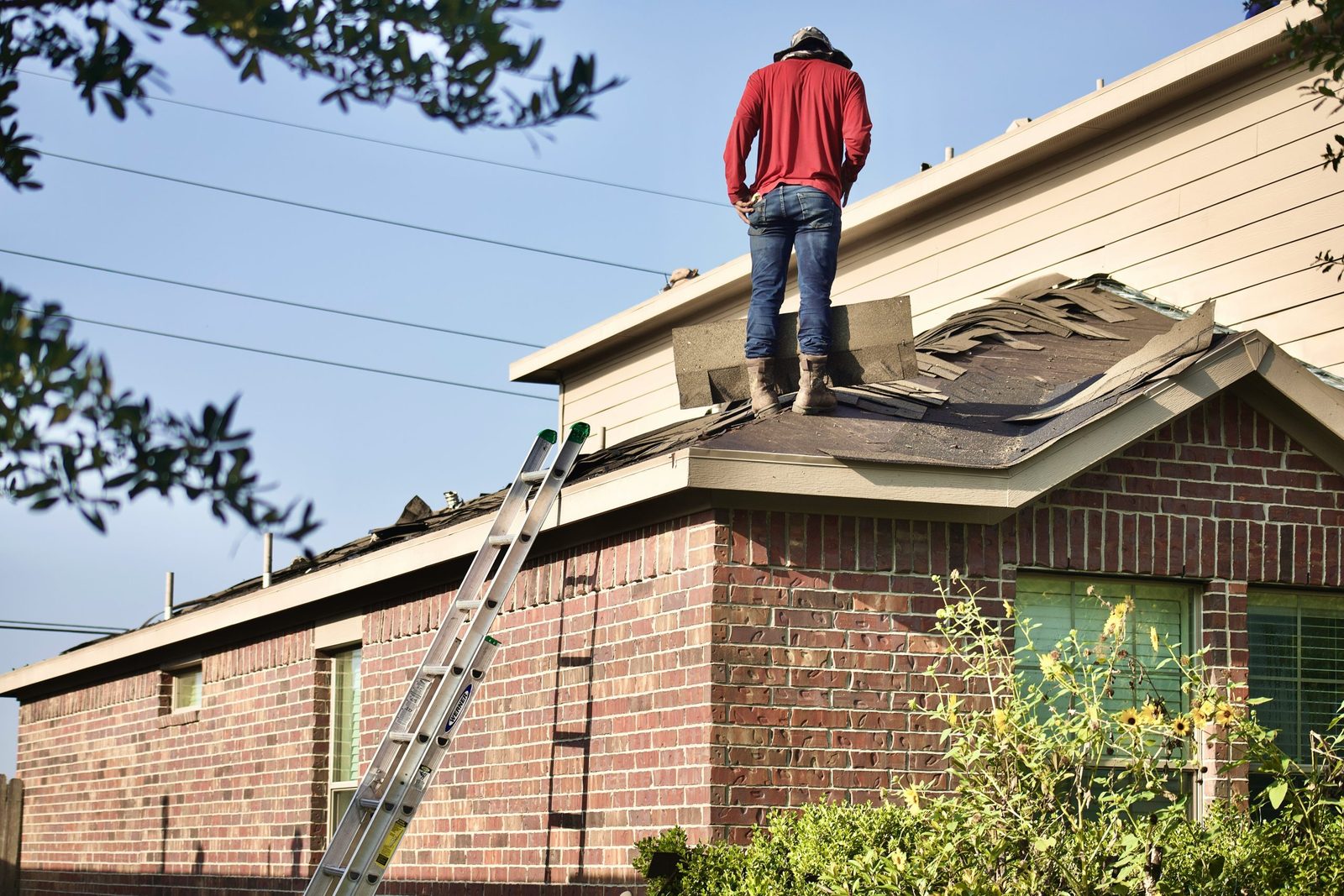
Storm Damage Resources for Houston Roofs
Hail in the spring, hurricanes from June through November, and straight-line wind in between — Houston roofs deal with more than most. This page is the starting point for storm-related help.
Houston's storm risk, in plain terms
Greater Houston sees two distinct storm patterns that matter for roofs. Spring brings hail season, when strong storm cells can drop hail that bruises shingles, cracks tiles or dents metal components without necessarily causing a visible leak right away. Hurricane season runs June 1 through November 30, and it's the period behind the wind damage, torn shingles and downed debris that generate most of the region's storm-related roofing claims. Straight-line wind events outside of a named storm can do similar damage on a smaller scale throughout the year.
Houston has lived through significant storms in recent memory — widespread flooding from Hurricane Harvey in 2017, and wind damage across the region from Hurricane Beryl in July 2024. Neither event affected every roof the same way, which is exactly why a roof-specific inspection matters more than assuming your house was fine because the street looked fine.
What to do right after a storm
- Check for safety issues first — downed lines, standing water indoors, or anything that needs immediate attention before roofing matters at all.
- Photograph what you can see from the ground, including gutters, downspouts and any visible debris or missing shingles, without climbing onto the roof yourself.
- Schedule a professional inspection even if the roof looks fine. Hail bruising and lifted shingles are often invisible from the ground or from photos taken at an angle.
- Keep any documentation the inspection generates — a written, photographed report is what your insurance carrier will actually want to see.
- Address active leaks quickly with emergency measures so water intrusion doesn't turn a roof problem into a ceiling, insulation and drywall problem.
Explore storm resources
Insurance and documentation
Most storm-related roof replacements in Houston go through an insurance claim rather than being paid out of pocket, which makes documentation the difference between a smooth claim and a frustrating one. Our insurance claim resources page covers what to gather and how the process generally works, and the existing insurance claims page walks through our role in it, start to finish.
Frequently asked questions
How do I know if hail actually damaged my roof?
Hail bruising isn't always visible from the ground. It can crack the mat underneath a shingle without tearing the surface, which shows up as accelerated wear later rather than an obvious hole. A close inspection, ideally after any storm producing hail in your area, is the only reliable way to know.
Should I get on my roof after a storm to check it myself?
We'd rather you didn't. Wet or damaged roofing is more dangerous to walk than it looks, and a professional inspection will document more than a ground-level or attic check can.
What's the difference between wind damage and a roof that's just old?
Wind damage tends to show as lifted, creased or missing shingles concentrated in specific areas, often the edges and ridges where wind pressure is highest. An aging roof shows more even, gradual wear — granule loss, curling — across the whole surface. An inspection can usually tell the two apart.
Want the number before anyone visits?
Type your address and we'll measure the roof from aerial imagery — area, pitch and every facet — then price it at our published rate per square. About fifteen seconds, and we don't need your phone number to show you the number.
Storm damage?
Get help restoring your property after damage
Our technicians will give you a detailed damage inspection report, so you have everything your insurance company needs to make a decision.