
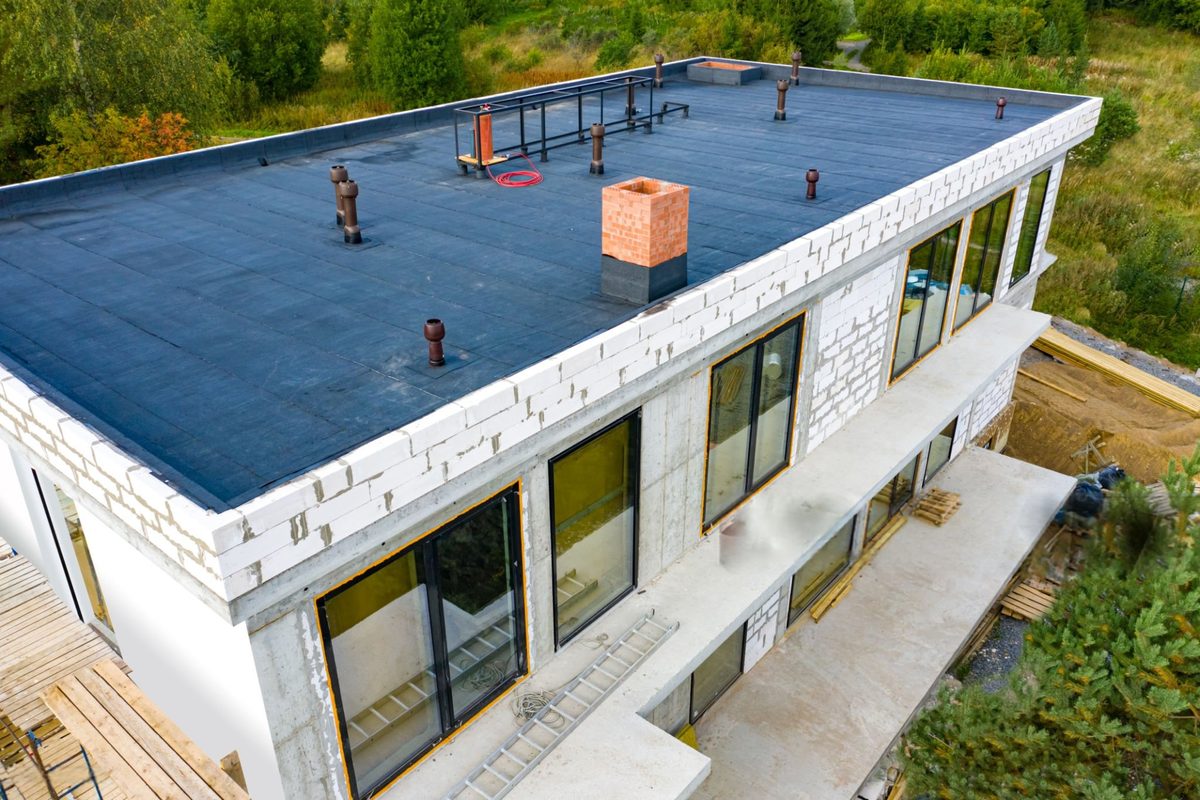
Ponding Water on a Flat Roof: Causes and Fixes
Almost every low-slope roof holds water briefly after rain. The question that actually matters is why some of it isn't draining at all, and what that's doing to the roof underneath.
What counts as ponding versus normal drainage
Nearly every low-slope roof has a very slight built-in pitch designed to move water toward drains over a reasonably short window after rain stops. Ponding refers to water that's still sitting well after that window has passed, in the same low spot storm after storm, rather than water that's simply on its way out.
Why low spots develop in the first place
The most common cause is structural deflection — the roof deck sagging slightly between supports over time under the weight of the membrane, insulation and normal roof traffic, creating a shallow depression that water naturally settles into. Poorly placed drains, insufficient original slope, or settling around rooftop equipment can all contribute the same basic problem from a different angle.
Clogged or damaged drains make it worse
Even a roof with adequate slope can develop ponding if the drains themselves are blocked by debris or damaged. This is the most straightforward cause to fix and the first thing worth ruling out before assuming a structural or design issue is to blame.
Why ponding actually matters
Standing water adds sustained weight to a roof structure, and prolonged UV and moisture exposure at a membrane seam that's sitting underwater accelerates wear compared to a seam that dries out normally between storms. Ponding areas also tend to collect windblown debris and organic growth, which can further degrade the membrane surface over time if left unaddressed.
How ponding gets assessed
A useful assessment happens after rain, when standing water is actually visible, rather than on a dry day when the problem is invisible. During a commercial inspection, we note where water is sitting, how large the area is, and whether it's tied to a drain problem, a low spot in the deck, or both.
How ponding actually gets fixed
Tapered insulation can be added over a low spot to restore proper slope toward the nearest drain without touching the structural deck itself. In some cases, adding a new drain or scupper closer to a persistent low spot is more practical than re-sloping a large area. Clearing and repairing existing drains addresses the simpler cases outright. The right fix depends entirely on what's actually causing the specific low spot.
When ponding points toward replacement instead of repair
Widespread ponding across multiple areas of an aging membrane, especially combined with visible wear or past patch repairs, is often a sign the roof is better addressed as a full replacement than a series of individual drainage fixes. We'll say so directly rather than recommending a patchwork of repairs on a roof that's genuinely due.
Ponding and rooftop equipment
Low spots near HVAC units or other rooftop equipment are worth extra attention, since equipment curbs can interrupt the roof's intended slope and create a pocket that traps water right next to the equipment's own flashing detail — already one of the more leak-prone areas on a low-slope roof. Fixing drainage near equipment sometimes has to account for the curb's placement, not just the surrounding membrane.
A simple way to check your own roof between inspections
After a rain, if it's safe to observe from a rooftop access point or a window looking down onto the roof, note where water is still visible a day or two later. A quick phone photo with a date noted gives you a useful record over a few storms, which helps separate a one-time puddle from a genuine, recurring low spot worth having assessed.
Frequently asked questions
Is any standing water after rain a problem?
Not necessarily. Water that drains within a reasonable window after rain stops is normal on a low-slope roof. Water that's still standing well after that, storm after storm, in the same spot is the pattern worth addressing.
Can ponding water cause a leak even if the membrane looks intact?
Yes. Sustained water exposure accelerates wear at seams and can eventually find its way through even an otherwise sound-looking membrane, especially at a seam that never fully dries between storms.
Does every ponding issue require tapered insulation?
No. Some ponding is a simple clogged-drain issue that's resolved without touching the roof's slope at all. An inspection after rain is the best way to know which situation applies to your roof.
Want the number before anyone visits?
Type your address and we'll measure the roof from aerial imagery — area, pitch and every facet — then price it at our published rate per square. About fifteen seconds, and we don't need your phone number to show you the number.
Storm damage?
Get help restoring your property after damage
Our technicians will give you a detailed damage inspection report, so you have everything your insurance company needs to make a decision.