
Commercial Roofing Resources
Commercial roofs fail differently than residential ones, and they're harder to take offline for repairs. Here's how we approach low-slope, steep-slope and maintenance work.
Low-slope systems we work with
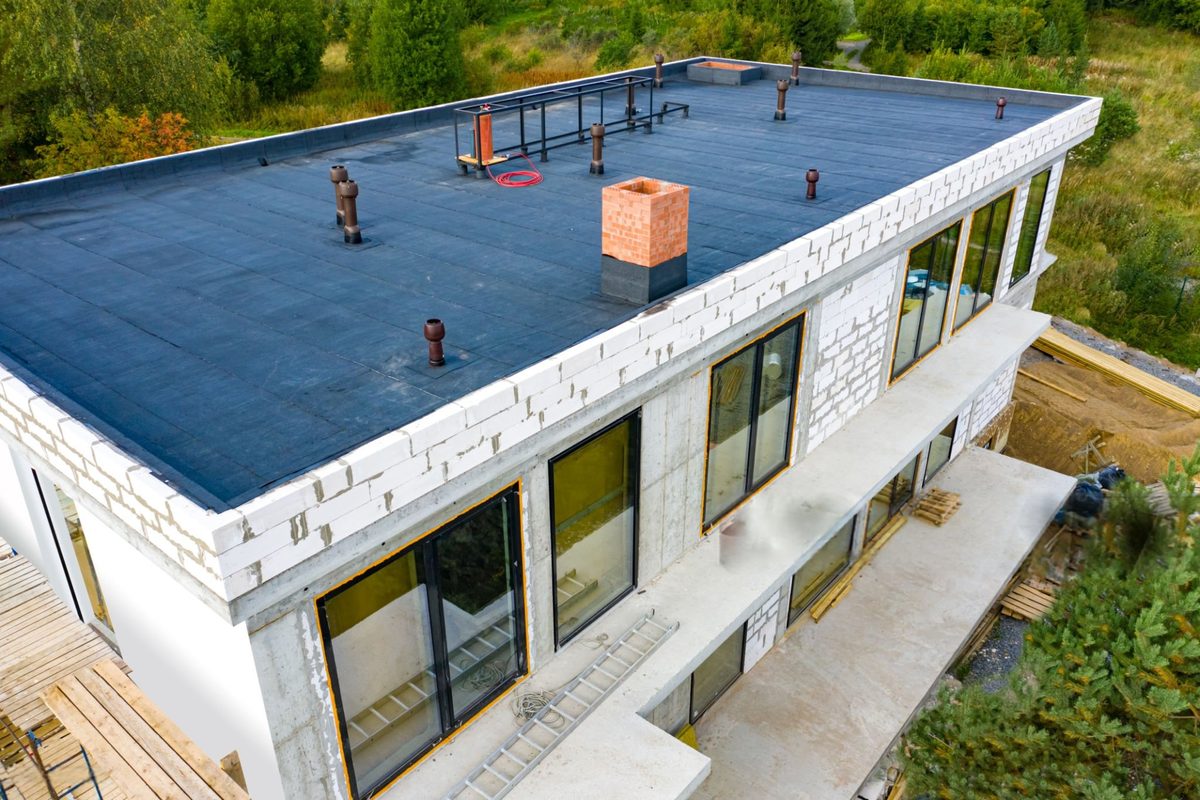
Most commercial buildings use a low-slope or flat roofing system rather than shingles, and the right choice depends on the building, budget and how the roof will be used.
- TPO (thermoplastic polyolefin) — a reflective single-ply membrane that's become a common choice for its balance of cost, energy efficiency and seam strength.
- Modified bitumen — an asphalt-based membrane reinforced for flexibility, often used where a heavier-duty, multi-layer system makes sense.
- Built-up roofing — alternating layers of bitumen and reinforcing fabric, a proven, long-standing system for buildings where a multi-ply approach fits the budget and design.
Drainage and ponding water are the recurring issue on any low-slope roof. Part of a proper installation and ongoing maintenance is making sure water actually reaches the drains instead of sitting on the membrane.
Steep-slope commercial roofs
Not every commercial building is flat. Steep-slope commercial roofs — over offices, churches, schools and similar buildings — use many of the same shingle systems as residential roofing, installed at a commercial scale with the same attention to tear-off, ventilation and flashing detail that a low-slope system needs in its own way.
What a commercial roof inspection looks for
A commercial inspection covers different ground than a residential one, because the failure points are different. On a low-slope membrane, we're checking seams, flashing at rooftop equipment, drain condition and any areas holding water after a rain. On a steep-slope commercial building, the concerns look closer to residential — shingle wear, flashing at parapets and penetrations, ventilation — but at a larger, often more complex scale involving multiple roof sections and rooftop units. Either way, the inspection produces a written report a property manager or ownership group can use to plan a budget, not just a single number.
Rooftop equipment adds its own wrinkle. HVAC units, vents, conduit runs and satellite or communications equipment all penetrate the roof membrane somewhere, and each penetration is a potential leak point if it wasn't flashed correctly when it was installed — sometimes by a trade other than the roofing contractor. Part of a thorough commercial inspection is tracing every one of those penetrations back to its flashing detail, not just walking the open field of the roof.
Maintenance programs
A scheduled maintenance program catches the small things — a lifting seam, a clogged drain, minor flashing wear — before they turn into an active leak that disrupts business operations. For a property manager overseeing multiple buildings, a consistent inspection schedule is usually far cheaper over time than reacting to problems one emergency call at a time.
Insurance claim support for property managers
Commercial roofs are just as exposed to hail and wind as residential ones, and the claims process runs on the same basic logic: documentation matters. We provide detailed inspection reports and meet adjusters on-site to walk the damage with them, so the claim is evaluated based on what's actually on the roof. We don't act as a public adjuster or represent you in negotiations with your carrier — our role is documentation and the roofing work itself, not claims representation.
Frequently asked questions
How do I know which low-slope system is right for my building?
It depends on your budget, the building's structure, energy goals and how the roof has performed historically. A commercial inspection is the right starting point for a specific recommendation.
Can you work around our building's operating hours?
In many cases, yes. Commercial scheduling is discussed and planned around your operational needs during the estimate process.
Do you offer ongoing maintenance contracts?
Yes, for properties that want scheduled inspections and minor repair work built into a regular program rather than handled reactively.
Want the number before anyone visits?
Type your address and we'll measure the roof from aerial imagery — area, pitch and every facet — then price it at our published rate per square. About fifteen seconds, and we don't need your phone number to show you the number.
Storm damage?
Get help restoring your property after damage
Our technicians will give you a detailed damage inspection report, so you have everything your insurance company needs to make a decision.