
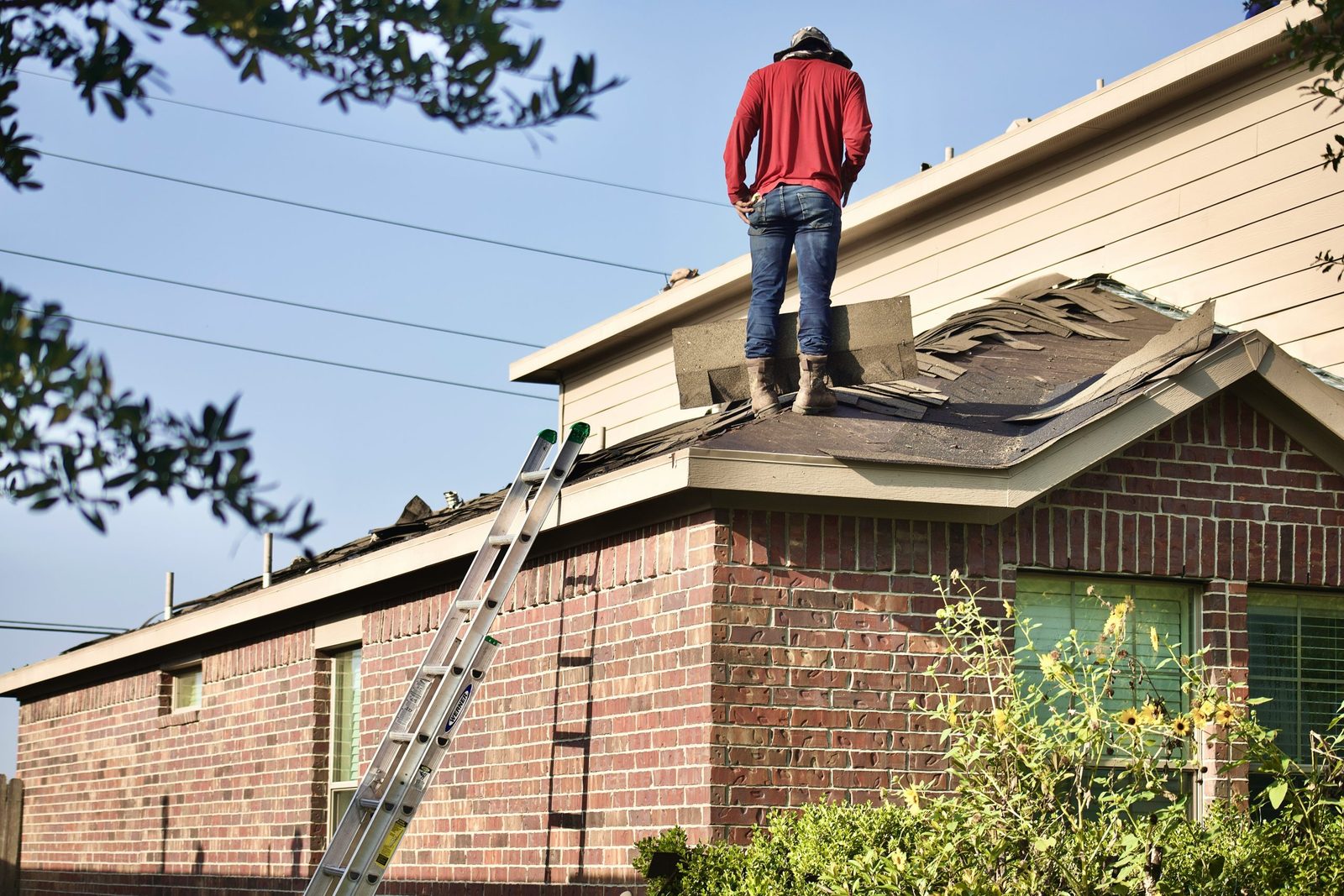
Signs of Wind Damage on a Roof
Wind damage doesn't always mean shingles scattered across the yard. Often it's quieter than that, and easy to miss if you're only looking for something dramatic.
Where wind damage tends to start
Wind pressure is highest at the edges, corners and ridge of a roof, which is exactly where damage tends to concentrate first. A roof can lose shingles or suffer significant lifting right along the eaves or ridge line while the broad, flat field of the roof looks completely undisturbed, which is why a full inspection matters more than a glance from the street.
Lifted and creased shingles
Sustained wind can lift a shingle's tab enough to break its seal without fully detaching it, leaving a crease where it folded back down. These creased shingles often look almost normal from a distance but no longer seal properly against wind-driven rain, which makes them a common source of a leak that develops weeks after the actual storm.
Missing shingles and exposed felt or decking
More obvious wind damage shows up as bare patches where shingles tore away completely, exposing underlayment or bare decking underneath. Even a small exposed area is a direct path for water intrusion and generally needs prompt attention rather than waiting for a scheduled inspection.
Displaced ridge caps and flashing
The ridge cap, running along the peak of the roof, takes some of the highest wind pressure on the entire structure and can lift, crack or blow off during a significant wind event. Flashing at chimneys and walls can also be bent or pulled loose by wind, which is easy to miss unless someone is specifically checking those areas.
Debris impact versus wind uplift
Not all wind-related damage comes from the wind itself. Falling tree limbs, fence panels, or debris from neighboring properties can cause impact damage anywhere on a roof during a wind event, distinct from the lifting and creasing caused by air pressure alone. Both types are worth documenting separately if a claim is involved, since they can point to different causes and different parts of the roof.
What to do if you suspect wind damage
Photograph what you can safely see from the ground, avoid walking on the roof yourself, and schedule a professional inspection promptly. If the damage is storm-related, keep the documentation for an insurance claim and note the approximate date of the wind event that caused it.
Wind damage on gutters, siding and fascia
A wind event strong enough to affect the roof often leaves marks elsewhere on the exterior too — a partially detached gutter section, siding panels loosened or blown off, or fascia pulled away from the roofline. Checking these areas alongside the roof itself gives a more complete picture of what the storm actually did to the property, and any of them can be a clue pointing toward roof damage that isn't yet obvious on its own.
Why an inspection after any significant wind event is worth it
Not every windstorm produces damage worth a claim, but distinguishing a storm that caused real damage from one that didn't isn't always possible from the ground. A prompt inspection after any wind event strong enough to bring down branches or move loose outdoor items is a reasonable threshold for scheduling a look, even if nothing seems obviously wrong.
Wind damage can compound over multiple events
A roof that took minor wind stress in one storm and wasn't inspected can be more vulnerable in the next one, since a shingle that's already been partially lifted and resealed on its own doesn't hold as well as one that was never disturbed. Across a hurricane season that can include several separate wind events, that compounding effect is part of why addressing damage after the first storm matters rather than waiting to see if it becomes obvious after a second or third.
Wind rating and what it does and doesn't promise
Shingles are manufactured and tested to withstand wind up to a certain level under specific installation conditions, but that rating assumes correct installation — proper nailing, adequate sealing time, and a system installed as designed. A wind-rated shingle installed incorrectly can still fail well below its tested threshold, which is one more reason installation quality matters as much as the product specification itself.
Frequently asked questions
How is wind damage different from a roof that's simply aging?
Wind damage tends to concentrate at edges, ridges and specific areas, often appearing suddenly. Aging shows up as more even, gradual wear across the whole roof surface.
Can wind damage happen without a named storm or hurricane?
Yes. Straight-line wind events outside of a named storm can produce similar damage on a smaller scale throughout the year.
Want the number before anyone visits?
Type your address and we'll measure the roof from aerial imagery — area, pitch and every facet — then price it at our published rate per square. About fifteen seconds, and we don't need your phone number to show you the number.
Storm damage?
Get help restoring your property after damage
Our technicians will give you a detailed damage inspection report, so you have everything your insurance company needs to make a decision.