
Filing a Roof Insurance Claim in Houston, Step by Step
Most storm-damaged roofs in Houston get replaced through an insurance claim rather than paid for out of pocket. Here's how that process generally unfolds, from the first phone call to the day a crew shows up.
Start with a professional inspection, not a guess
Before you call your insurance carrier, it helps to actually know what happened to the roof. Hail bruising and wind-lifted shingles aren't always visible from the driveway, and filing a claim on a hunch can slow things down if the carrier sends its own adjuster and finds nothing obvious to point to. A written inspection report with photographs gives you something concrete to reference the moment you pick up the phone, and it becomes your own record independent of whatever the carrier's adjuster produces.
Step 1: Document everything you can before you call
Photograph anything visible from the ground — missing or curled shingles, dented gutters, debris in the yard, damage to fences or siding. Note the date of the storm if you know it, since carriers generally want a reasonably prompt report tied to a specific weather event. If you already scheduled a professional inspection, keep that report handy; it's the strongest piece of documentation you'll have going into the claim.
Step 2: Report the claim to your carrier
Call the number on your policy or use your carrier's app to open a claim. You'll be asked for basic details — when the damage happened, what you've noticed, whether the roof is actively leaking. Be factual and specific rather than guessing at cause or extent; that's what the adjuster's visit is for. This is also the point where you'll learn whether your policy separates a standard deductible from a dedicated wind or hail deductible, which affects what you'll owe out of pocket.
Step 3: Prepare for the adjuster's visit
Once the claim is open, the carrier schedules an adjuster to inspect the property, either alone or alongside your contractor. Being present, or having your contractor present, matters — someone who knows what the roof actually needs is more likely to catch something the adjuster's initial pass misses, particularly on the parts of the roof that are hardest to see from a ladder or a drone photo.
Step 4: Compare the adjuster's scope to what the roof actually needs
The adjuster produces a scope of loss — an itemized list of what they're approving and at what cost. It's worth comparing that scope against your own inspection report line by line. If something's missing — decking damage, a ventilation component, a code-required upgrade — a contractor can document the gap and submit a supplement, a normal and routine part of many claims rather than a confrontation.
Step 5: Understand the payout and get the work scheduled
Depending on your policy, you'll be paid on a Replacement Cost Value or Actual Cash Value basis, sometimes in two installments tied to completion of the work. Once you've accepted the scope and understand the numbers, the roofing work itself can be scheduled. Keep every document the claim generates — the scope of loss, correspondence, photos — in case a question comes up later.
What tends to slow a claim down
The most common delays trace back to incomplete documentation, a gap between the initial scope of loss and what the roof actually needs, or simply waiting on scheduling during a busy stretch after a widespread storm. Staying organized — keeping copies of everything, responding to carrier requests promptly, and working with a contractor who communicates clearly with the adjuster — won't guarantee a fast claim, but it removes most of the avoidable delays that stretch an otherwise straightforward claim out for weeks.
Where a contractor fits into this process
A roofing contractor's role in a claim is documentation and the roofing work itself — not negotiating on your behalf or acting as a public adjuster. We provide the inspection report and photos you'll need to support a claim and meet the adjuster on the roof so the scope reflects what's actually there, but you remain the policyholder making the decisions with your carrier throughout.
Frequently asked questions
How soon after a storm should I file a claim?
As soon as you reasonably can. Most policies expect timely notice of damage, and the longer you wait, the harder it can be to connect what you're seeing to a specific weather event rather than gradual wear.
Do I need a contractor present for the adjuster's visit?
It's not required, but it helps. A contractor familiar with the roof can point out anything the adjuster's initial pass might miss, especially on hard-to-see areas.
What if I disagree with the adjuster's scope of loss?
You can request a re-inspection or have your contractor submit a supplement with documentation of what was missed. Disagreements over scope are common and usually resolved without escalating further.
Want the number before anyone visits?
Type your address and we'll measure the roof from aerial imagery — area, pitch and every facet — then price it at our published rate per square. About fifteen seconds, and we don't need your phone number to show you the number.
Storm damage?
Get help restoring your property after damage
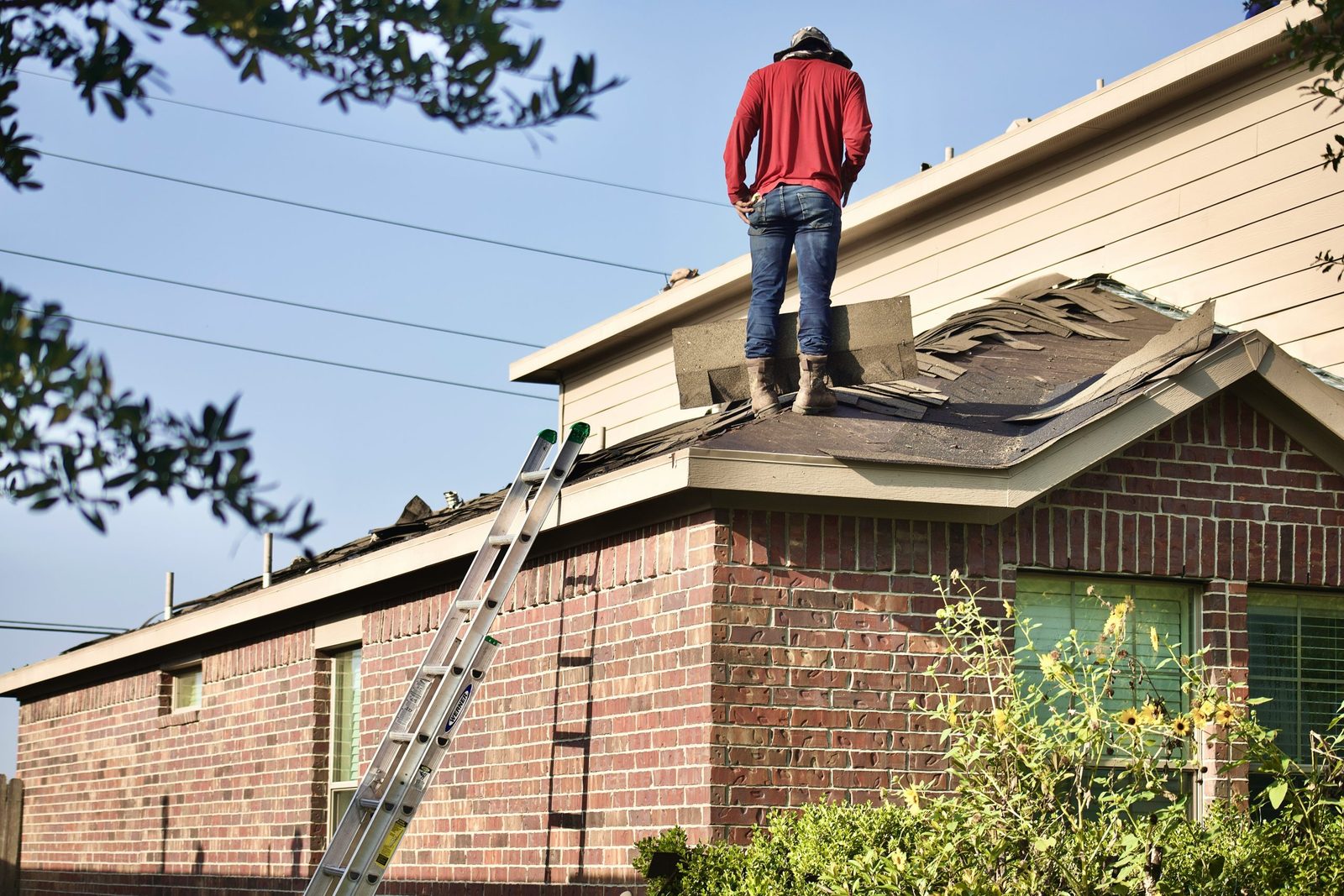
Our technicians will give you a detailed damage inspection report, so you have everything your insurance company needs to make a decision.