
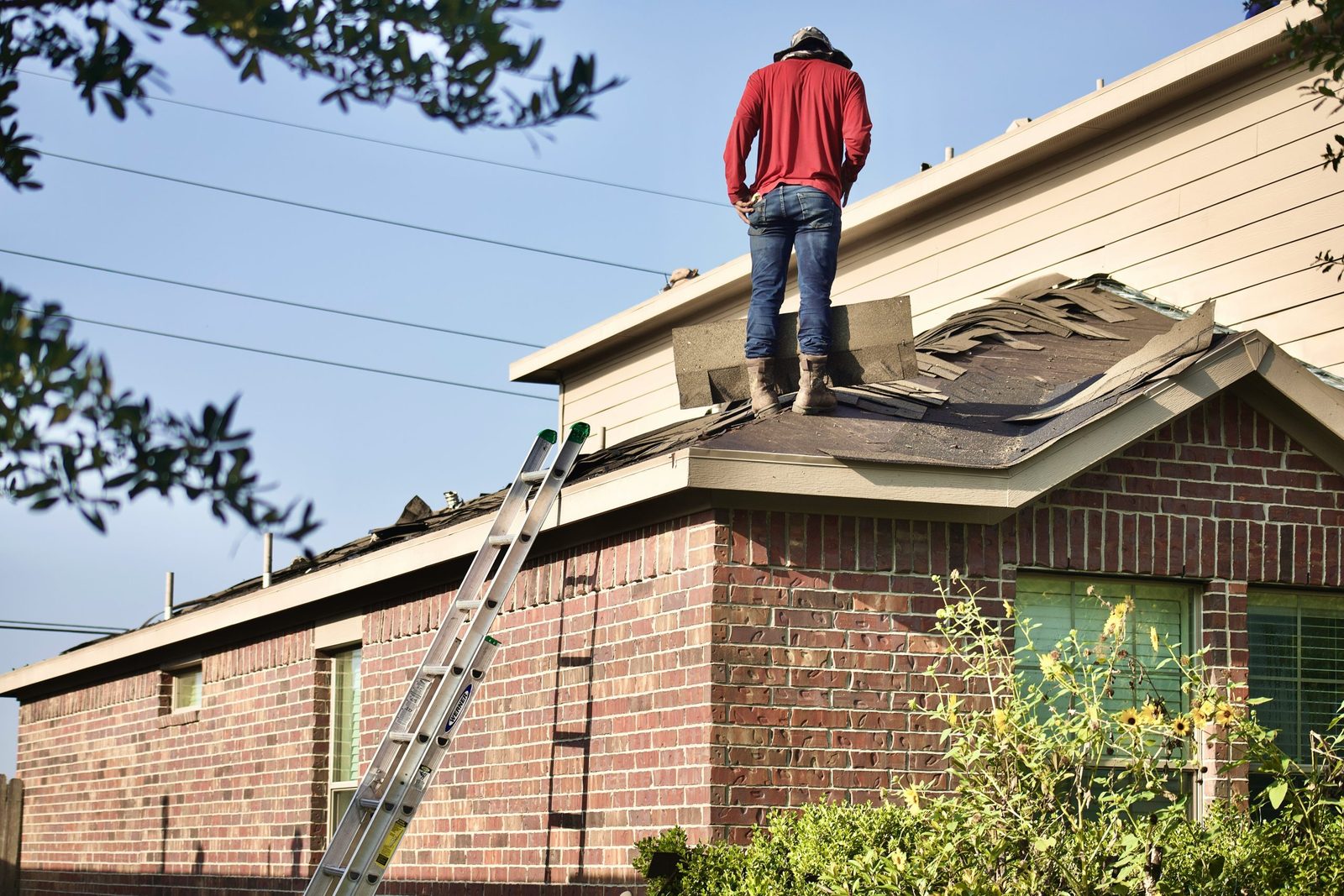
Signs of Roof Decking Rot
Decking rot is one of the quieter roof problems, because the layer that's actually failing is the one you can't see once the roof is finished.
Why decking rot is so easy to miss
The decking sits underneath underlayment and shingles, invisible from outside and mostly hidden from the attic side too unless the damage has progressed enough to show through. That's part of why it tends to be discovered during a tear-off rather than caught early — the symptoms that do show up on the surface are often subtle.
Signs visible from inside the attic
- Staining or discoloration on the underside of the deck or rafters, especially in a consistent pattern rather than a single spot.
- Daylight visible through small gaps, indicating a compromised or separated area of decking.
- Sagging in the deck between rafters, visible as a slight dip when viewed at an angle.
- A musty smell, which often points to sustained moisture even before visible staining develops.
Signs detectable from the roof surface
Soft or spongy spots underfoot are the clearest surface-level sign, though this is something for a professional to check rather than something to test yourself by walking the roof. A visible dip or wave in an otherwise flat roof plane can also indicate decking that's begun to sag under the shingles above it.
Signs that show up inside the home
A water stain on a ceiling, especially one that grows or reappears after rain, often traces back to a leak that's been feeding moisture into the decking above for some time before it became visible indoors. By the time a stain shows up on a ceiling, the decking above it has often been compromised for a while already.
What actually causes it
Long-term, unaddressed leaks are the most common cause, along with poor attic ventilation that traps moisture against the underside of the deck even without an active leak. Roofing over an existing layer instead of tearing off can also hide decking problems for years, since nobody sees the deck's actual condition until the old material finally comes off.
How it gets confirmed
Tear-off is the definitive way to see decking condition across the whole roof, which is one reason we don't roof over an existing layer. Short of that, a roofing professional checking accessible attic areas can sometimes spot early warning signs, though full confirmation of the extent usually waits until the old roofing actually comes off.
Why it's worth addressing promptly once suspected
Decking rot doesn't improve on its own, and delaying a roof project on a roof that already shows these signs generally means a larger repair scope by the time work finally starts. Small, isolated soft spots are typically a straightforward cut-and-replace fix; widespread rot found across a larger area points toward more extensive deck replacement as part of the project.
How decking rot relates to ventilation, not just leaks
A leak is the most direct cause, but chronically poor attic ventilation can rot decking on its own over enough time, simply by keeping moisture trapped against the underside of the wood with nowhere to go. This kind of rot can develop without any single obvious leak event, which is part of why a decking problem sometimes surprises a homeowner who never noticed a stain or a drip.
What this means if you're planning a repair versus a full replacement
If decking rot is confirmed or suspected in more than one isolated area, it's worth having the whole roof assessed rather than authorizing a single-spot repair and hoping the rest of the deck is fine. A roof is only as reliable as its weakest section of decking, and addressing rot piecemeal, area by area, over several separate visits is rarely the more economical path in the long run.
Frequently asked questions
Can I check for decking rot myself?
The attic-side signs — staining, sagging, daylight, musty odor — are reasonable for most homeowners to check carefully. Confirming anything on the roof surface itself is best left to a professional inspection.
Does decking rot always mean a full roof replacement?
No. Small, isolated areas are often repaired without replacing the whole deck. Widespread rot found across multiple sections more often points toward a broader replacement.
Will my homeowner's insurance cover decking rot?
It depends on the cause. Sudden storm-related damage is more likely to be covered than gradual rot from long-term neglect or a pre-existing leak that went unaddressed.
Want the number before anyone visits?
Type your address and we'll measure the roof from aerial imagery — area, pitch and every facet — then price it at our published rate per square. About fifteen seconds, and we don't need your phone number to show you the number.
Storm damage?
Get help restoring your property after damage
Our technicians will give you a detailed damage inspection report, so you have everything your insurance company needs to make a decision.